Probability 1 · Year 7
Probability Language
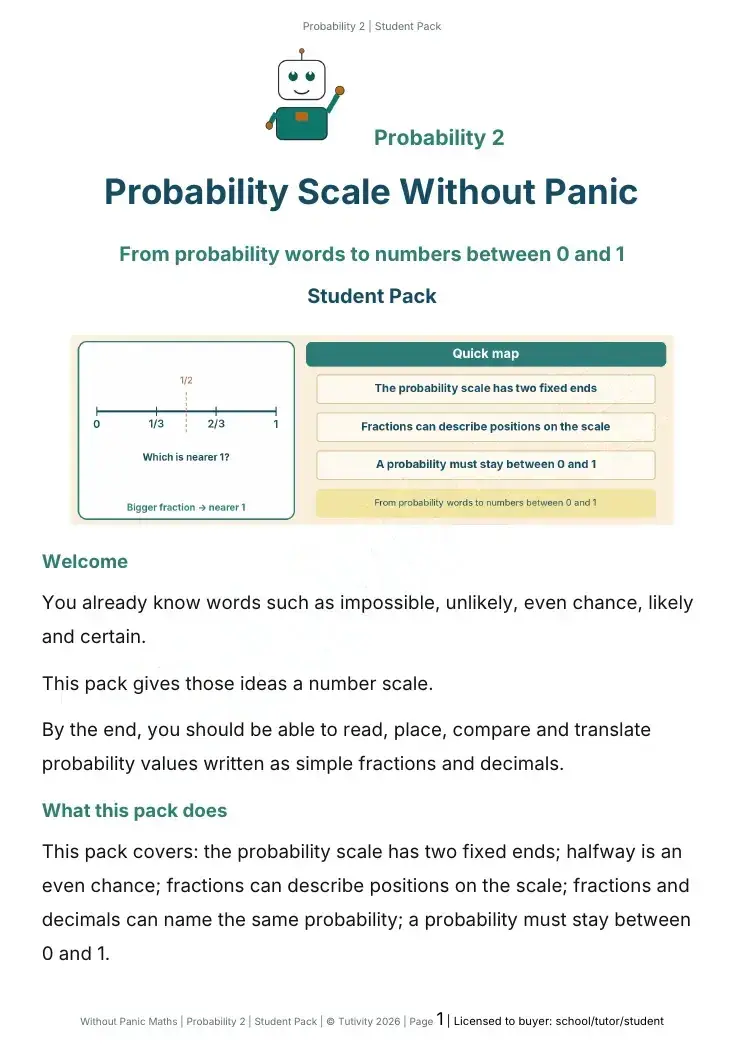
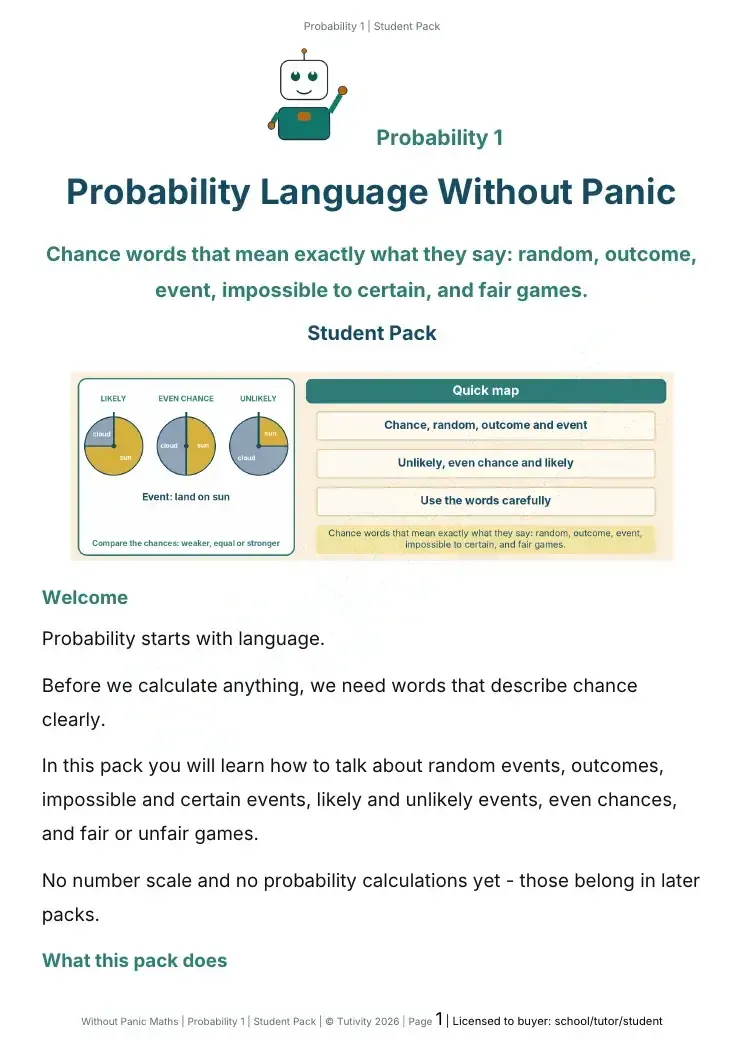
Chance words that mean exactly what they say: random, outcome, event, impossible to certain, and fair games.
Free
Without Panic Maths · Probability 7
Turn experiment counts into fair comparisons — and learn why more evidence usually behaves more calmly.
What this pack does
Calculate relative frequency; compare experiments with different numbers of trials; judge how much evidence an estimate is based on; and explain why larger samples usually give more stable estimates.
Inside every pack
Pupils tick how a topic feels before they start, and again at the end. There are no marks, so it's an honest picture of where they are.
Each topic is split into small steps. Every mini-lesson opens with one big idea and a short, plain-English explanation.
Diagrams such as a formula 'rule machine' or a place-value picture show the maths, so pupils can see it as well as read it.
Every method is modelled step by step before pupils try it, with each stage labelled so they can follow it on their own.
Questions start with prompts (what do you need to find, follow the example, check it makes sense) and gradually ask for more independence.
Common mistakes are named before pupils make them, and Mistake Detective questions ask them to find and fix errors.
Short 'explain it in your own words' prompts check that pupils understand why the maths works, not just how.
Every pack comes with a Teacher Pack: all the answers, plus reteach cards saying what to watch for, what to say, and what to try if a pupil is still stuck.
More probability packs
Chance words that mean exactly what they say: random, outcome, event, impossible to certain, and fair games.
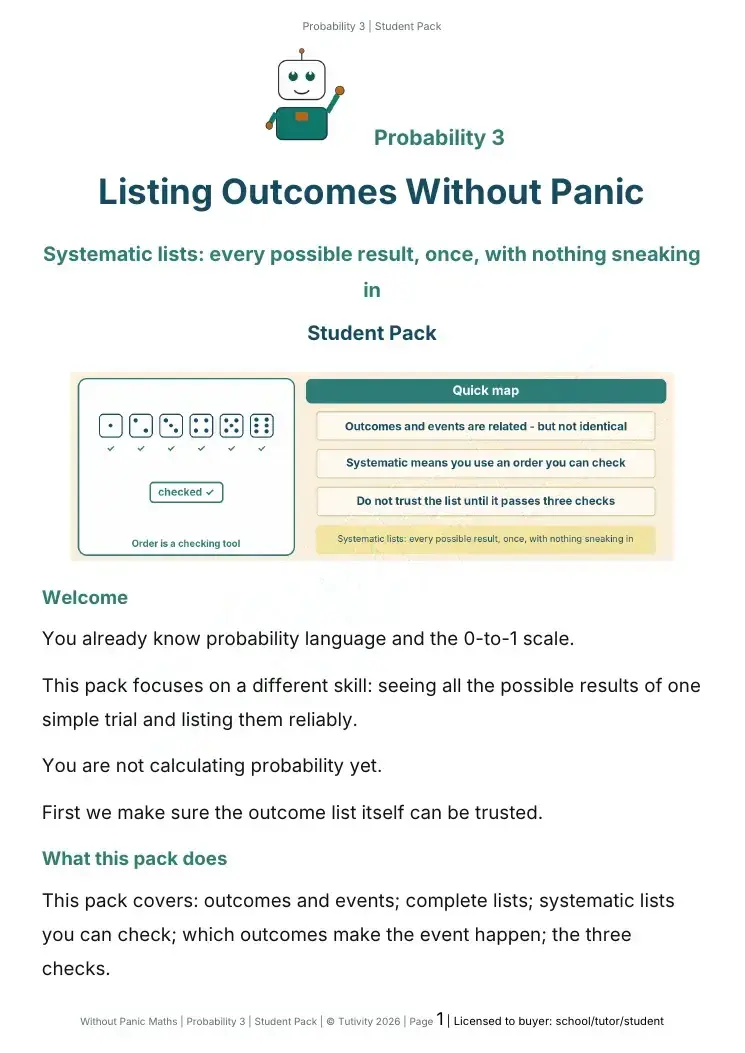
Systematic lists: every possible result, once, with nothing sneaking in